
Beard transplantation in Mainz: Planning contour and donor hair
Filling gaps or changing your beard contour starts with how you would like to wear your beard. Whether a procedure is suitable can only be established through a medical examination.
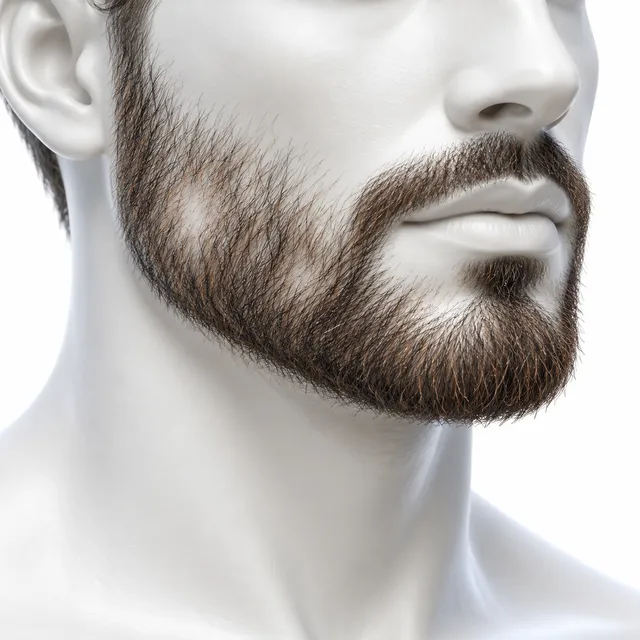
When might a beard transplant be considered?
A beard transplant places your own hair follicles into areas with little or no beard hair. A gap alone does not tell us whether this is appropriate. Skin, the cause of hair loss, suitable donor hair and expectations must be assessed together.
A naturally sparse beard, a new bald patch and a scar are different starting points. Before planning, it must be clear whether a medical condition or skin change needs to be assessed first.
If the cause of hair loss is unclear, see our guide to medical investigation of hair loss.
Planning your beard contour and existing hair together
Contour planning considers transitions along the cheeks, jaw and upper lip, as well as existing hair. The plan should suit your desired beard length: a short beard reveals different details from a longer one.
Unlike scalp treatment, this involves a visible facial contour. Colour, thickness, curl and emergence angle affect how transplanted hairs blend in. A straight edge or more grafts alone does not create a suitable beard shape.
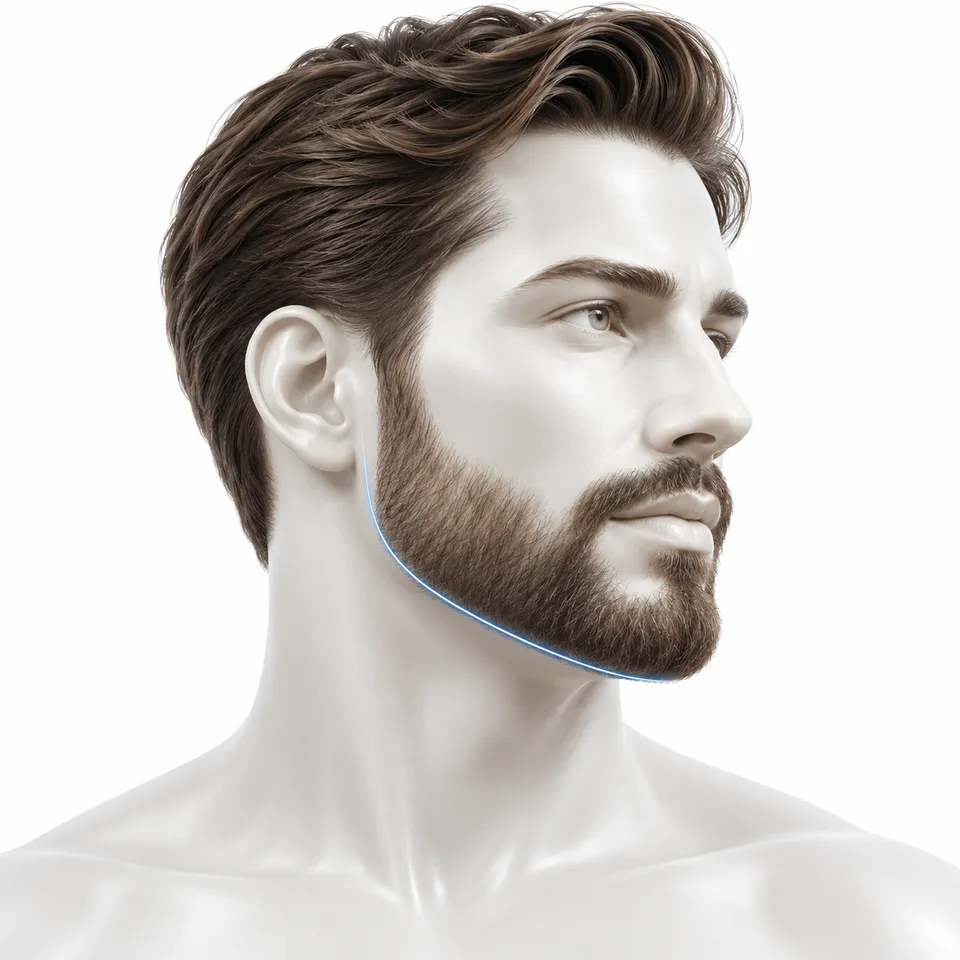
Beard contour planning considers transitions, existing hair and the desired shape.
Which donor hair is suitable for a beard transplant?
Donor hair characteristics need to suit the beard area. Scalp hair is not automatically as thick or curly as existing beard hair. The suitable donor area must be examined.
If scalp hair is used, those follicles will no longer be available there as a future reserve. Possible later scalp treatment should therefore also be considered. A desired density cannot be promised independently of the donor area.
The planning for a limited donor supply explains this relationship in more detail.
What does the process generally involve?
After examination and informed consent, the desired contour and possible treatment extent are established. Your own hair follicles are extracted from a suitable donor area and placed in the beard area. Placement must suit the existing growth direction.
FUE describes individual extraction and DHI an implantation technique; the two can be combined. A method's name does not specify who is responsible, where your procedure takes place or its exact process.
The technical steps are explained in our comparison of FUE and DHI. The actual procedure, preparation and aftercare belong in your personal plan.
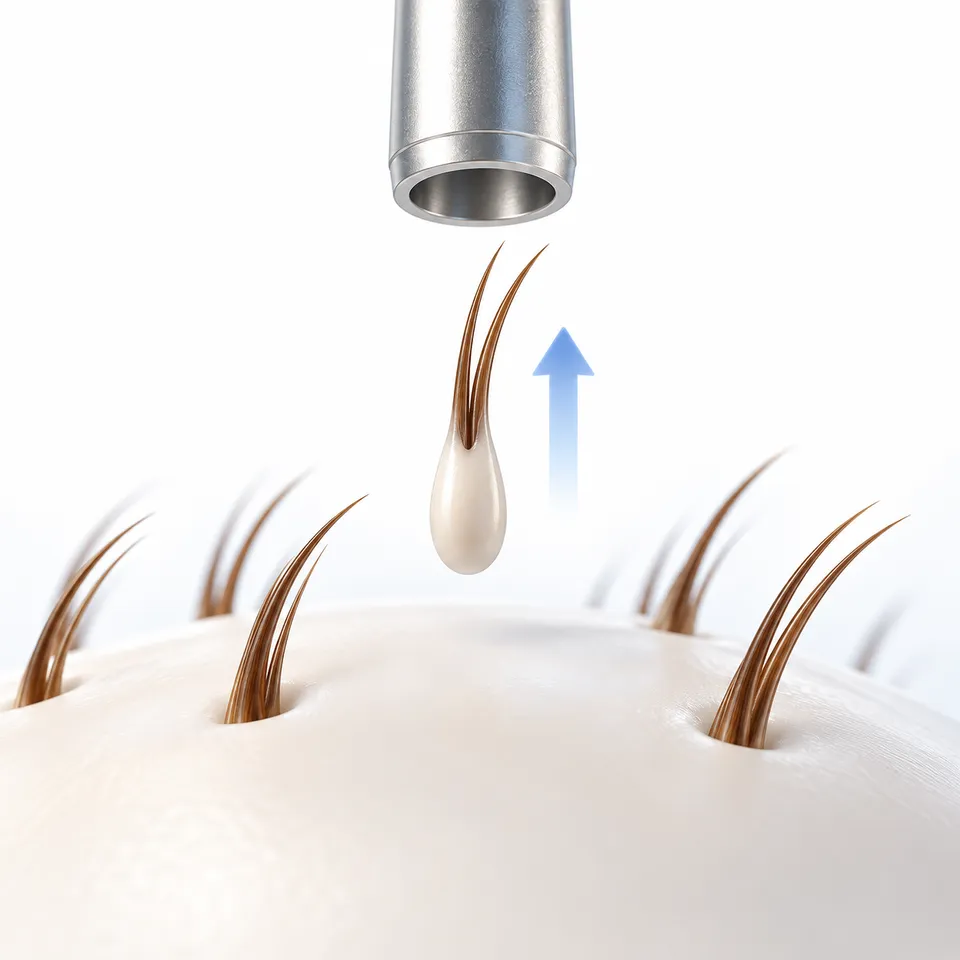
Donor hair and extraction are part of individual beard transplant planning.
What matters after a beard transplant?
Crusts, redness or swelling may occur in the treated areas. Skin healing and later hair growth are different processes; the appearance immediately after surgery is not a finished result.
When you can resume washing, shaving and your usual skin care depends on your personal medical instructions. A general timeframe cannot replace them. Transplanted hair may retain donor-area characteristics, so ongoing care should be considered before deciding.
What are the risks and limitations of a beard transplant?
Alongside general surgical risks such as infection and scarring, insufficient growth, an unsuitable emergence angle or an uneven contour may affect the result. Excessive extraction can also visibly thin the donor area.
Neither a particular density nor a fully covered beard area can be guaranteed. Before deciding, you should understand whether the desired change appears achievable with your available hair and which alternatives exist.
Costs and personal consultation for beard transplantation
Costs depend on the planned extent and agreed services. Your beard treatment is priced individually; the starting price for scalp hair shown on the costs page is not a beard price.
Contact our practice by phone or email to request an appointment. The people performing treatment, appointment locations and aftercare must be agreed before treatment. The practice address alone does not identify the surgical location.
The cost overview for comparing quotes helps put this into context.
Find out more about your medical contact under Melih Kandemir and the practice.
Use the phone and email contacts to request an appointment.
This information does not replace a personal examination. Discuss which treatment may be suitable with your doctor.
Other questions you may have
These answers can help you prepare.
01Is every beard gap suitable for a transplant?
This can only be assessed after an examination. A new bald patch or changed skin needs to be considered differently from a beard that has always been sparse.
02Can scalp hair look different from my beard?
Yes. Thickness, colour and curl may differ. Donor hair therefore needs to suit the planned beard contour and desired length.
03Will my donor area also change?
Yes. Extracted follicles are no longer available there as a reserve; scarring or thinning are also possible. The extent of treatment must therefore suit the donor area.
04When can I shave again?
That depends on the procedure and healing. You will receive personal instructions on shaving, washing and care; no general clearance after a fixed number of days is given here.
05Can a particular beard density be guaranteed?
No. Donor hair, placement and growth limit the possible result. Complete coverage or a fixed density cannot be promised.
06Does the scalp starting price also apply to beard treatment?
No. Beard transplant costs are established individually. The published starting price for scalp hair is not a quote for this treatment.
Your next step starts with a conversation.
What is possible for you, what does treatment involve and how are costs determined? You do not have to work through these questions alone.