
Eyebrow transplantation in Mainz: Shape and growth direction
Even the direction of individual eyebrow hairs affects facial expression. Planning therefore needs to bring together shape, hair characteristics and ongoing care. A medical examination establishes your individual starting point.
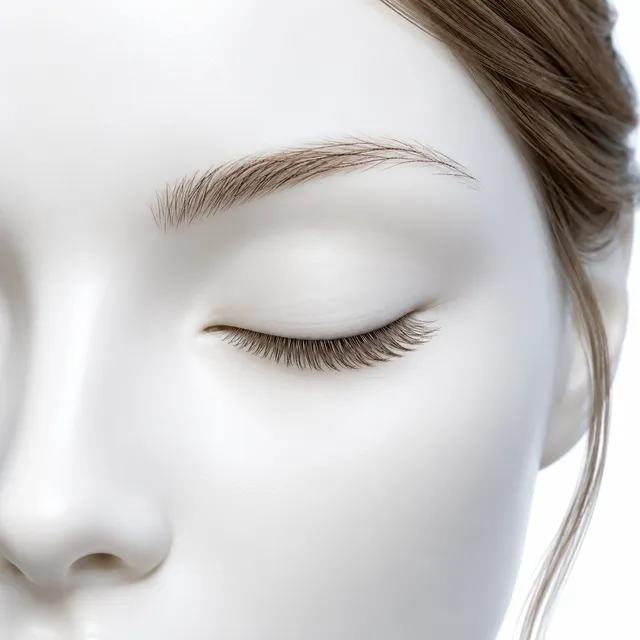
Why the cause matters before planning your eyebrows
Sparse eyebrows can have various causes, including years of plucking, injuries or conditions that cause hair loss. A visible gap alone does not establish suitability for a transplant.
The skin and hair loss must be examined first. Whether a procedure is an option also depends on suitable donor hair and the underlying situation. A desired eyebrow shape cannot tell us whether an active condition is present.
Learn more about distinguishing between causes in medical assessment of hair loss.
How is a suitable eyebrow shape planned?
The inner brow, arch and outer end are considered alongside your existing shape. The discussion establishes which areas you would like to change and which you would like to preserve. A template alone cannot account for your existing hairs or every difference between the two sides.
The planned shape must be compatible with the available hair. Perfect symmetry or a particular expression cannot be guaranteed.
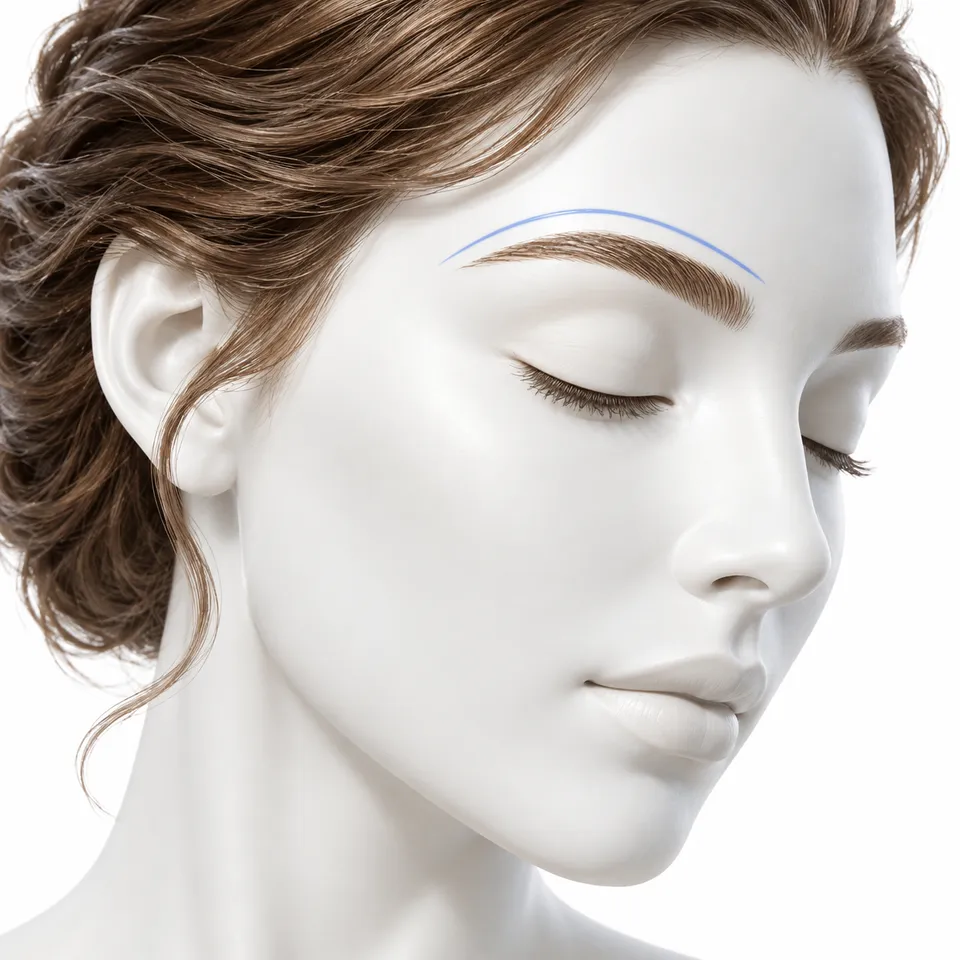
The inner brow, arch and outer end are planned as a continuous shape.
Why hair characteristics and growth direction matter
Eyebrow hairs lie against the skin differently and follow different directions from scalp hair. Hair selection, angle and orientation therefore affect how transplanted hairs blend into the eyebrow.
Suitable donor hair must also match in thickness and structure. If scalp hair is used, it may continue growing longer than the original eyebrow hairs. Ongoing care is therefore a separate part of planning, beyond the healing period.
What does an eyebrow transplant generally involve?
The basic principle is to move your own hair follicles from a suitable donor area into the planned eyebrow areas. The delicate distribution and orientation of the hairs distinguish this from planning a larger scalp area.
Examination, informed consent and shape planning come before surgical extraction and implantation. The instruments and steps used, who performs them and where the procedure takes place must be agreed personally.
Extraction and implantation are explained separately on our FUE and DHI page.
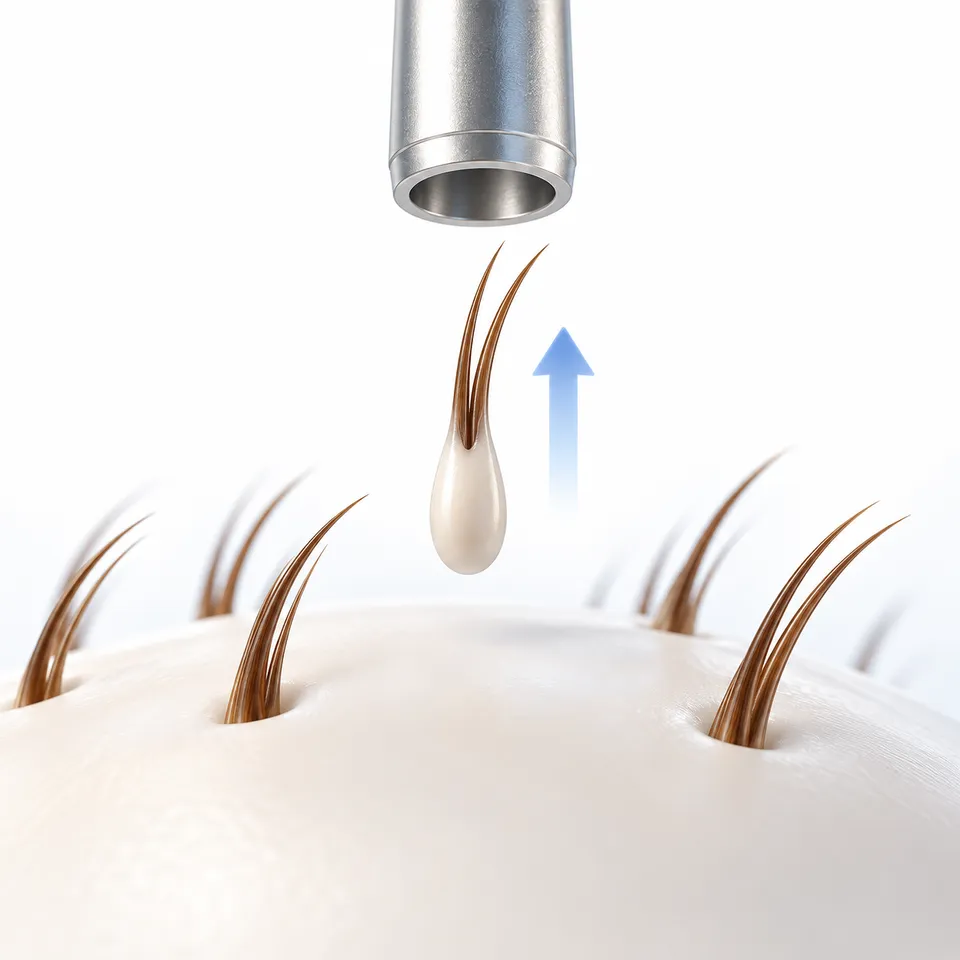
Selecting and extracting suitable donor hairs is distinct from shaping the eyebrows afterwards.
What care may be needed after an eyebrow transplant?
Swelling, bruising and crusts may occur after the procedure. How to clean the areas and when to resume cosmetics or sport must be explained personally. A fixed number of days would not account for individual healing.
Regular trimming may still be necessary after healing if transplanted scalp hair continues to grow longer. You should be aware of this possible care requirement before deciding.
What are the risks and limitations for eyebrows?
Possible complications include infection, scarring, insufficient growth and hairs whose direction or curvature does not suit the desired eyebrow. Even small differences can be noticeable in the eyebrow area.
Growth, a fixed density or an exact shape cannot be guaranteed. An informed decision should also consider ongoing care and which non-surgical options may suit your situation.
How does your individual consultation begin?
Describe which areas you would like to fill in or how you would like to change the shape. A personal examination establishes the requirements for further planning.
Eyebrow transplantation costs are discussed individually. The starting price for scalp hair is not an eyebrow price. Responsibilities, appointment locations and aftercare must also be agreed specifically.
The cost overview for other treatments explains the pricing question.
Meet the doctor and practice.
Send your appointment request by phone or email to the practice.
This information does not replace a personal examination. Discuss which treatment may be suitable with your doctor.
Information from Melimedicshair. Meet the doctor and practice.
Medical sourcesISHRS – Eyebrow reconstruction ↗Hair Transplant for Eyebrow Restoration – Review (2021) ↗Cleveland Clinic – Care and possible risks ↗Other questions you may have
These answers can help you prepare.
01Is a transplant suitable for every thinning eyebrow?
That depends on the cause, skin and suitable donor hair. An examination is necessary; a desired shape or photograph cannot establish suitability.
02Why is drawing an outline not enough?
Hair thickness, curvature, angle and growth direction also affect appearance. The drawn outline alone does not determine the eventual result.
03Will I need to trim transplanted eyebrow hair?
This may be necessary, especially if scalp hair is used and continues growing longer. This possible care requirement should be discussed before treatment.
04Is a symmetrical eyebrow shape guaranteed afterwards?
No. Shape, density and growth cannot be guaranteed precisely. Hairs growing in an unsuitable direction or curve are also possible limitations.
05When can I use make-up again?
This depends on healing and your individual care instructions. No general timeframe is promised here.
06How do I find out the price?
Costs are established through personal examination and planning. The stated starting price for scalp hair does not automatically apply to eyebrow transplants.
Your next step starts with a conversation.
What is possible for you, what does treatment involve and how are costs determined? You do not have to work through these questions alone.